Locked room
The locked room is the central physical and narrative condition of the murder on the Orient Express: Ratchett's compartment was found with its door locked and chained from the inside, its window open but showing no footprints in the snow, and its communicating door bolted on the other side, creating an apparently impossible crime that forces Poirot to deduce how the murderer could have entered and left without leaving a trace.
The Physical State of the Compartment
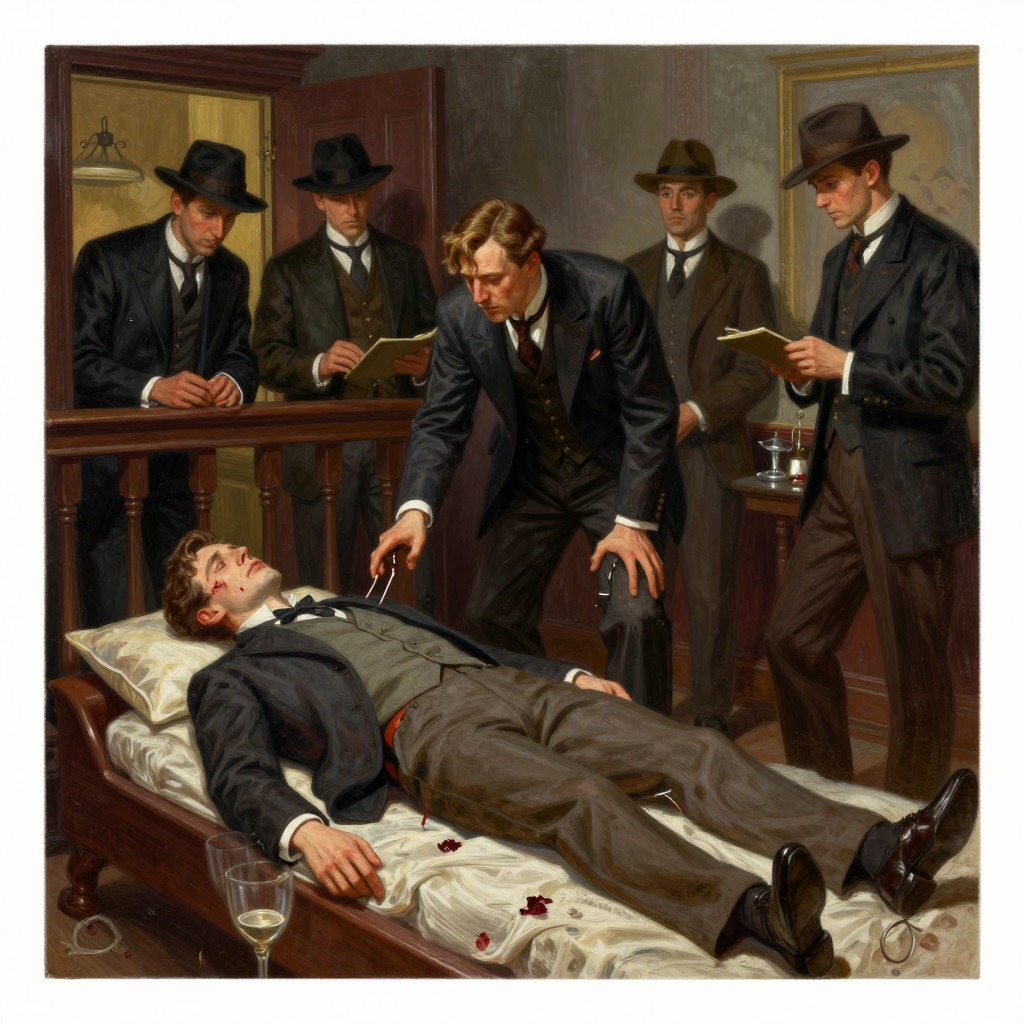
When the body was discovered at eleven o'clock in the morning, the conductor Pierre Michel opened the door with his key but found the chain fastened from within. The chef de train had to break the chain to enter. The window was pushed down as far as it would go and the blind drawn up, suggesting an escape route, but Dr. Constantine immediately noted that anyone departing that way would have left distinct traces in the snow—and there were none. The communicating door leading to Mrs. Hubbard's compartment was bolted on the other side, and the door into the corridor was not only locked on the inside but chained. Poirot himself later locked the communicating door from Ratchett's side to prevent Mrs. Hubbard from entering. The compartment thus presented three sealed exits: a bolted communicating door, a locked and chained corridor door, and a window that led only to undisturbed snow.
The Impossibility and Its Narrative Function
The locked room creates the classic "impossible crime" puzzle that defines the investigation. As Poirot remarks to Dr. Constantine, the situation is like a stage trick: "That is what the audience says when a person bound hand and foot is shut into a cabinet—and disappears." He explains that if the murderer intended the police to believe he escaped through the window, he would naturally make the other two exits appear impossible. The locked room is therefore not a genuine barrier but a deliberate illusion, and Poirot's task is to discover how the trick was done. The snowdrift that stopped the train at half an hour after midnight compounds the impossibility: no one could have left the train after that point, so the murderer must still be among the passengers.
The Solution: How the Locked Room Was Opened
The locked room is ultimately explained by the conspiracy of twelve passengers, each of whom entered Ratchett's compartment through Mrs. Hubbard's adjoining compartment to stab him. The door between Mrs. Hubbard's compartment and Ratchett's was never genuinely bolted on Ratchett's side; the bolt was a deception. Mrs. Hubbard, who was in fact Linda Arden, the mother of the victim's daughter-in-law, played the key role: she occupied the compartment next to Ratchett's and her story of a man in her compartment was a cover for the procession of killers. The Wagon Lit conductor Pierre Michel, whose daughter Susanne had been the Armstrongs' nursemaid and had committed suicide after being wrongly suspected, was part of the plot and provided the pass-key and uniform that allowed the conspirators to move through the train. The locked room was thus not a barrier to the murderers but a stage set designed to mislead the investigation into believing an outside assassin had come and gone.
Thematic Significance
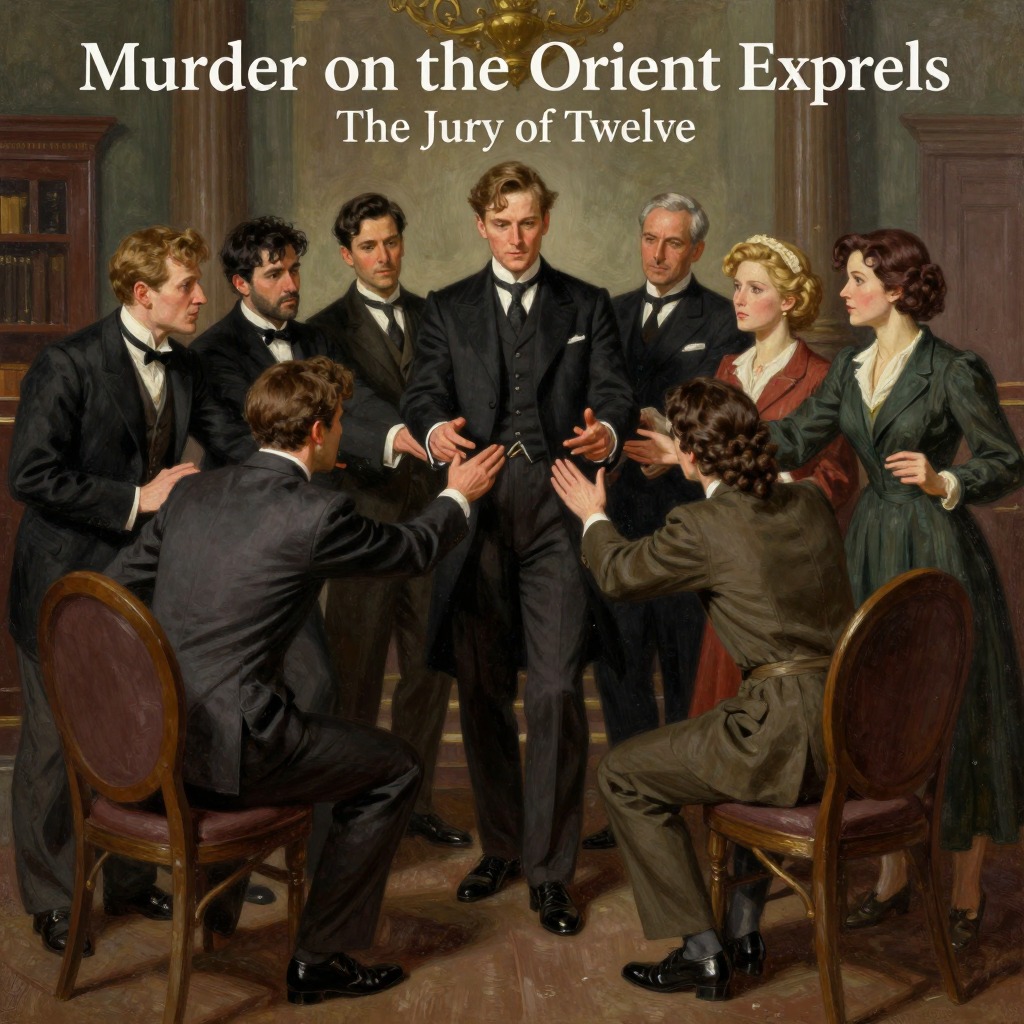
The locked room embodies the novel's central theme: the conflict between legal justice and private vengeance. The twelve passengers constitute a self-appointed jury that has condemned Ratchett to death, and the locked room is the physical manifestation of their closed, self-contained system of justice. It is a space where the normal rules of detection—fingerprints, footprints, locked doors—are deliberately manipulated to create an insoluble puzzle, forcing Poirot to rely on psychology rather than physical evidence. The room's apparent impossibility mirrors the moral impossibility of the legal system's failure to punish Cassetti, and its solution reveals that the only way out of the locked room is through the collective action of those who have been wronged.